
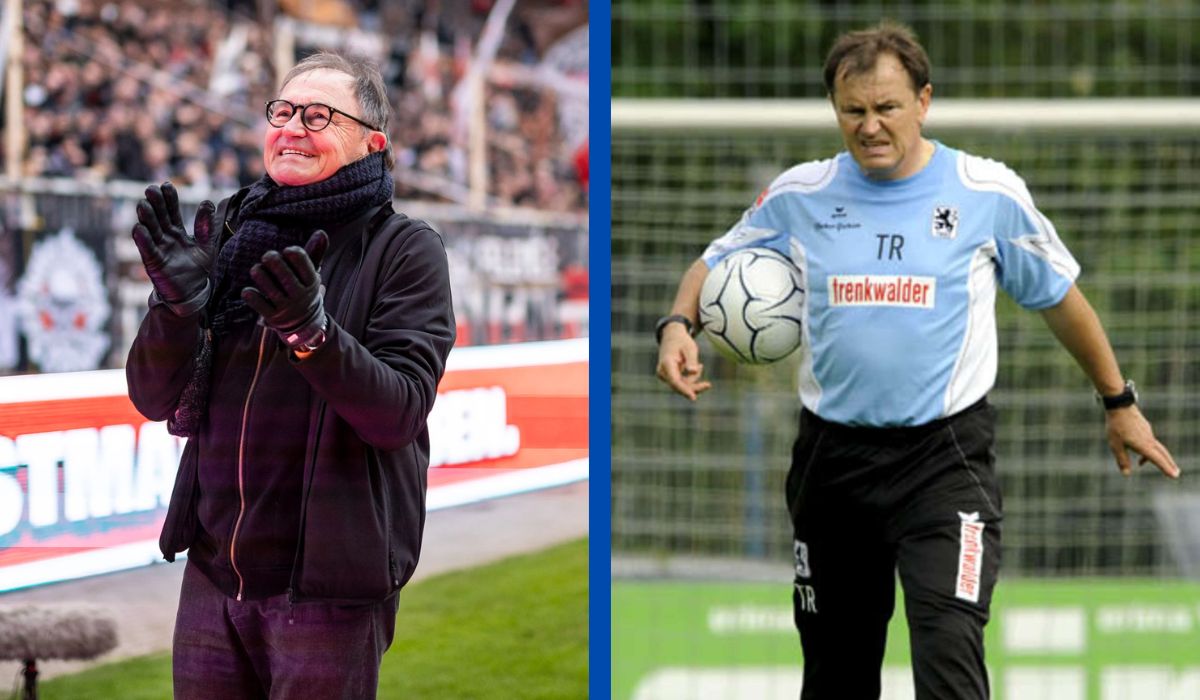
Ewald Lienen is one of the most fascinating figures in German football history. Over several decades, he built an impressive reputation as both a talented midfielder and a respected football manager. His career spans some of the most memorable moments in Bundesliga history, including European success, dramatic title races, a shocking injury that remains famous to this day, and coaching experiences across several countries.
What makes Ewald Lienen particularly interesting is the variety of roles he has held throughout football. He was a creative player, a UEFA Cup winner, a coach who worked in Germany, Spain, Greece, and Romania, and later a technical director. His story is not simply about trophies and statistics. It is also about resilience, leadership, and a lifelong commitment to the game.
Even in 2026, football fans continue to search for information about Ewald Lienen because his career offers valuable lessons about determination, adaptability, and passion for football. From his early days in West Germany to his influential role at FC St. Pauli, his journey remains remarkable.
Quick Bio Of Ewald Lienen
| Information | Details |
|---|---|
| Full Name | Ewald Lienen |
| Date Of Birth | 28 November 1953 |
| Age | 72 Years Old (As Of 2026) |
| Birthplace | Liemke, North Rhine-Westphalia, West Germany |
| Nationality | German |
| Profession | Former Football Player And Football Manager |
| Playing Position | Midfielder |
| Height | 1.76 m (5 ft 9 in) |
| Youth Club | VfB Schloß Holte |
| First Professional Club | Arminia Bielefeld |
| Most Famous Playing Club | Borussia Mönchengladbach |
| UEFA Cup Titles | 1 (1979) |
| Total Career Appearances | 551 |
| Total Career Goals | 95 |
| Coaching License | Earned With Top Grade |
| Countries Managed In | Germany, Spain, Greece, Romania |
| Last Major Club Role | Technical Director At FC St. Pauli |
| Known For | Legendary Injury Incident And Coaching Career |
| Retirement As Player | 1992 |
| Football Legacy | Successful Player, Manager, And Football Thinker |
Who Is Ewald Lienen?
Ewald Lienen is a former German football player and manager who became known for his intelligence on the field, tactical understanding of the game, and long-lasting influence within European football. During his playing career, he developed into one of the Bundesliga’s most respected midfielders. After retirement, he successfully transitioned into management and guided clubs across several European leagues.
Unlike many football figures who are remembered for a single achievement, Lienen built a reputation in multiple areas. He enjoyed success as a player, managed numerous clubs in challenging situations, and later took on executive responsibilities. His career demonstrates how football knowledge can be applied both on and off the pitch.
Early Life And Passion For Football
Born on 28 November 1953 in Liemke, North Rhine-Westphalia, Ewald Lienen grew up in a football-loving environment. Like many young German players of his generation, he spent countless hours developing his skills on local pitches. Football quickly became more than a hobby; it became his future.
His youth development took place at VfB Schloß Holte, where he learned the fundamentals of the game. Coaches and teammates soon recognized his technical ability, vision, and understanding of midfield play. These qualities would eventually become trademarks of his professional career.
The discipline and work ethic he developed during these formative years helped prepare him for the challenges of professional football. His rise was not based solely on talent. Dedication and a strong understanding of the game played equally important roles.
Beginning His Professional Career At Arminia Bielefeld
Lienen’s professional breakthrough came when he joined Arminia Bielefeld in 1974. At the time, the club competed in the 2. Bundesliga, and the young midfielder quickly established himself as an important player. His creativity, passing ability, and tactical awareness allowed him to stand out.
Over three seasons, he made 93 league appearances and scored 24 goals. These numbers were impressive for a midfielder and attracted attention from larger clubs. His performances helped demonstrate that he could compete at a higher level.
Arminia Bielefeld proved to be the ideal launching pad for his career. The club gave him the opportunity to develop, gain experience, and showcase his talent on a larger stage. Soon, one of Germany’s most successful clubs came calling.
Success At Borussia Mönchengladbach
In 1977, Ewald Lienen joined Borussia Mönchengladbach, one of the strongest teams in German football. The club had recently dominated the Bundesliga and remained highly competitive in both domestic and European competitions.
The move represented a major step forward. Surrounded by elite players and facing stronger opposition every week, Lienen continued to grow as a footballer. He became an important member of a team that regularly challenged for honors.
His time at Borussia Mönchengladbach elevated his reputation significantly. He demonstrated that he could perform at the highest level and contribute to a team filled with international talent.
UEFA Cup Glory In 1979
One of the defining moments of Ewald Lienen’s playing career came during the 1978–79 UEFA Cup campaign. Borussia Mönchengladbach advanced through a difficult tournament and eventually reached the final against Red Star Belgrade.
Lienen played a key role throughout the competition. He contributed goals, created opportunities, and provided stability in midfield. His performances helped the club navigate several challenging matches against strong European opponents.
The campaign ended in celebration as Borussia Mönchengladbach lifted the UEFA Cup trophy. Winning a major European title remains one of the greatest achievements of Lienen’s career and secured his place in club history.
Another European Final
Success in Europe continued the following season. As defending champions, Borussia Mönchengladbach once again made a deep run in the UEFA Cup. The team reached the final for the second consecutive year.
This time, however, the outcome was different. The final against Eintracht Frankfurt ended in disappointment as Borussia Mönchengladbach lost on the away-goals rule. Despite the defeat, reaching back-to-back European finals highlighted the quality of the team and the importance of players like Lienen.
His consistency on the European stage further strengthened his reputation as one of Germany’s most dependable midfielders during that era.
Return To Arminia Bielefeld
After several successful years at Borussia Mönchengladbach, Lienen returned to Arminia Bielefeld in 1981. The club had recently earned promotion to the Bundesliga and hoped his experience would help establish them in the top division.
His return proved valuable. The team managed to compete effectively and avoid immediate relegation. Lienen’s leadership, technical skills, and understanding of the game made him one of the squad’s most influential players.
These seasons demonstrated another important aspect of his career. He was not only effective at elite clubs competing for trophies but also capable of helping developing teams achieve stability and growth.
The Injury That Shocked Football
Few incidents in football history are as famous as the injury Ewald Lienen suffered on 14 August 1981. During a Bundesliga match against Werder Bremen, a tackle by defender Norbert Siegmann caused a severe wound to Lienen’s thigh.
The challenge left a deep gash approximately 25 centimeters long. The injury was so severe that muscle tissue and parts of the femur became visible. Images of the incident shocked football fans across Germany and around the world.
Remarkably, Lienen’s determination became almost as famous as the injury itself. Despite requiring 23 stitches, he returned to training only a short time later. The incident remains one of football’s most memorable examples of toughness and resilience.
Returning To Borussia Mönchengladbach Again
In 1983, Lienen returned to Borussia Mönchengladbach for a second spell. Once again, he became an important contributor. The club consistently finished near the top of the Bundesliga standings and remained one of Germany’s strongest teams.
Although a league title remained elusive, Lienen continued to perform at a high level. He participated in important matches and helped the club remain competitive throughout the mid-1980s.
His second period with the club further cemented his legacy as a Borussia Mönchengladbach player. By the time he departed, he had become one of the most respected figures associated with the team.
Final Years As A Player At MSV Duisburg
In the summer of 1987, Ewald Lienen began the final chapter of his playing career when he joined MSV Duisburg. By this point, he was already an experienced Bundesliga midfielder with hundreds of professional appearances behind him. However, rather than slowing down, he continued to contribute both on and off the pitch.
At Duisburg, Lienen combined his playing responsibilities with preparations for a future in coaching. He worked toward earning his coaching qualifications and became increasingly interested in football tactics and team development. During his time there, the club achieved promotion to the 2. Bundesliga and later returned to the Bundesliga itself.
Lienen remained a valuable leader within the squad until his retirement in 1992. When Duisburg were relegated at the end of the season, he decided to end his playing career. He retired with 551 professional appearances and 95 goals, impressive numbers that reflected his consistency, durability, and influence across two decades of football.
Career Statistics And Major Achievements
Looking back at Ewald Lienen’s playing career, the statistics reveal a footballer who consistently delivered high-level performances. Across his years at Arminia Bielefeld, Borussia Mönchengladbach, and MSV Duisburg, he established himself as one of Germany’s most reliable midfielders.
His greatest achievement as a player was undoubtedly winning the UEFA Cup with Borussia Mönchengladbach in 1979. He also reached another UEFA Cup final in 1980 and appeared in the 1984 DFB-Pokal Final. Beyond trophies, his influence came from his intelligence, vision, technical ability, and leadership.
The fact that he remained relevant across different clubs and football eras demonstrates the quality of his game. Few players manage to maintain such a strong reputation over such a long period, and Lienen’s achievements continue to earn respect among football historians and Bundesliga supporters.
Transition From Player To Football Manager
Unlike some former players who struggle after retirement, Ewald Lienen moved naturally into coaching. Even during the final years of his playing career, he had already begun preparing for management. His interest in tactics and football education made coaching a logical next step.
He earned his coaching license with outstanding results, receiving top marks that reflected his deep understanding of the game. Those who worked with him often noted his analytical approach and willingness to study football beyond what happened during matches.
His transition was helped by years of experience under different coaches and football systems. By the time he officially entered management, he possessed a strong foundation of knowledge and practical experience that would serve him throughout his coaching journey.
Building A Coaching Reputation In Germany
Lienen’s first major coaching opportunity came with MSV Duisburg. After working with the club’s amateur side, he eventually became head coach of the first team. Early results were encouraging, and he quickly earned a reputation as a thoughtful and disciplined manager.
His managerial career later took him to Hansa Rostock, where he guided the club during challenging Bundesliga seasons. Although not every campaign was successful, he demonstrated a talent for working under pressure and helping clubs navigate difficult situations.
One of his most significant achievements came at 1. FC Köln. After the club suffered relegation, Lienen helped guide them back to the Bundesliga. Winning promotion and restoring confidence at such a historic club enhanced his standing within German football and showed that he could manage expectations at a high-profile organization.
Experiences In Spain
Lienen’s football journey extended beyond Germany when he moved to Spain. Initially, he worked alongside the highly respected Jupp Heynckes at CD Tenerife. This experience exposed him to a different football culture and broadened his tactical understanding.
Later, he returned to Tenerife as head coach. Although the club did not achieve promotion during his tenure, the experience added another valuable chapter to his coaching career. Managing in a foreign country requires flexibility, cultural awareness, and strong communication skills, qualities that Lienen continued to develop.
His time in Spain also reflected his willingness to embrace new challenges. Rather than remaining in familiar surroundings, he consistently sought opportunities to learn and grow within different football environments.
Success In Greece
Some of the most successful managerial years of Ewald Lienen’s career came in Greece. When he became manager of Panionios, expectations were modest. However, he quickly transformed the team into a competitive force.
Under his leadership, Panionios achieved consecutive fifth-place finishes and qualified for European competition. These achievements were particularly impressive considering the financial and competitive challenges faced by the club.
Lienen later managed Olympiacos and AEK Athens, two of Greece’s most famous clubs. Although those appointments were shorter, they reinforced his reputation as a coach capable of working in demanding football environments. His years in Greece remain among the most notable periods of his managerial career.
Challenges In Romania
In 2013, Lienen accepted another international challenge by becoming manager of Oțelul Galați in Romania. The club faced significant difficulties and was battling to avoid relegation.
Drawing upon his experience and leadership, Lienen helped stabilize the team and ultimately secured their survival in the top division. His work was widely appreciated by supporters, many of whom praised the attractive style of football he introduced.
Although his time in Romania lasted only one season, it demonstrated his ability to adapt to different leagues and circumstances. Once again, he showed that effective management is about much more than tactics alone.
Leadership Style And Football Philosophy
Throughout his career, Ewald Lienen became known for his strong opinions and thoughtful approach to football. He often spoke openly about issues affecting the game, including player welfare, club management, and the direction of modern football.
As a coach, he valued discipline, intelligence, and teamwork. He believed that football should be played with purpose and creativity rather than relying solely on physical strength. Players who worked under him frequently described him as demanding but fair.
His willingness to speak honestly sometimes generated controversy, but it also earned respect. Many supporters admired his commitment to principles and his refusal to avoid difficult conversations. This authenticity became one of the defining characteristics of his public image.
FC St. Pauli And A New Chapter
One of the most important chapters of Lienen’s later career came at FC St. Pauli. He joined the club during a difficult period and immediately focused on improving stability and performance.
As head coach, he helped the team navigate challenging circumstances and avoid further decline. His experience and calm leadership proved valuable during a critical stage in the club’s development.
In 2017, he transitioned into the role of Technical Director. This position allowed him to influence the club beyond the touchline. He became involved in long-term planning, player development, and strategic decision-making, further strengthening his connection with FC St. Pauli.
Ewald Lienen’s Lasting Legacy
The legacy of Ewald Lienen extends far beyond statistics and trophies. As a player, he won major European honors and established himself as one of Germany’s respected midfielders. As a manager, he worked across multiple countries and successfully guided clubs through promotions, relegation battles, and rebuilding projects.
His career also stands out because of his resilience. The famous injury he suffered in 1981 could have ended many careers, yet he returned and continued playing at a high level. That determination became a symbol of his character.
Today, Lienen is remembered not only for what he achieved but also for how he approached football. His intelligence, honesty, and commitment to the sport have earned admiration from fans, players, and fellow coaches alike.
Conclusion
Ewald Lienen’s story is one of dedication, resilience, and continuous growth. From a talented young player in West Germany to a UEFA Cup winner, respected manager, and football executive, he experienced nearly every aspect of the game at a high level. His journey through Germany, Spain, Greece, and Romania highlights both his adaptability and his passion for football.
What makes Ewald Lienen particularly remarkable is that his influence cannot be measured solely through trophies or statistics. His leadership, football knowledge, and commitment to his principles have left a lasting impression on clubs, players, and supporters. Decades after his playing debut, his name continues to be associated with intelligence, determination, and a genuine love for the sport.
As football continues to evolve, the career of Ewald Lienen remains a valuable example of how success can be achieved through hard work, resilience, and a lifelong dedication to the beautiful game.
FAQs About Ewald Lienen
When Was Ewald Lienen Born?
Ewald Lienen was born on 28 November 1953 in Liemke, North Rhine-Westphalia, West Germany. His football career began at a young age and eventually developed into one of the most respected careers in German football.
Which Position Did Ewald Lienen Play?
Lienen played primarily as a midfielder. He was known for his technical skills, vision, passing ability, and tactical intelligence, qualities that made him an influential presence in the center of the pitch.
Which Clubs Did Ewald Lienen Play For?
During his professional career, he represented Arminia Bielefeld, Borussia Mönchengladbach, and MSV Duisburg. His most successful playing years came with Borussia Mönchengladbach, where he achieved European success.
What Is Ewald Lienen Most Famous For?
Many football fans remember him for the severe thigh injury he suffered in 1981. However, he is also famous for winning the UEFA Cup, enjoying a successful Bundesliga career, and managing clubs across Europe.
Did Ewald Lienen Win Any Major Trophies?
Yes. His biggest trophy was the UEFA Cup, which he won with Borussia Mönchengladbach in 1979. He also reached another UEFA Cup final and participated in major domestic competitions throughout his career.
Which Teams Did Ewald Lienen Manage?
Lienen managed numerous clubs, including MSV Duisburg, Hansa Rostock, 1. FC Köln, CD Tenerife, Borussia Mönchengladbach, Hannover 96, Panionios, Olympiacos, AEK Athens, Oțelul Galați, Arminia Bielefeld, TSV 1860 Munich, and FC St. Pauli.
What Was His Role At FC St. Pauli?
After serving as head coach, Lienen became Technical Director at FC St. Pauli. In this role, he helped shape the club’s football strategy, development plans, and long-term vision.
Why Is Ewald Lienen Important In Football History?
Ewald Lienen is important because he succeeded in multiple roles throughout football. He was a UEFA Cup-winning player, an international manager, a football executive, and a respected voice within the sport. His influence has extended across several decades of European football.
Recommended For You: Bryna Lublin Biography: Marriage, Life, and Her Connection To Daryl Hall